Blog
»
{{catList[366].label}}
» Almudí Palace
Almudí Palace

If you want to learn about Spain's history and tour Baroque architecture, the Almudi Palace in Murcia is the ideal setting. Esteban Fernandez, who had a budget of 4,000 maravedis, completed the building in 1440.
Several modifications were made over time, mainly due to various types of damage. The work involved different master builders and sculptors such as Cristobal de Salazar, who is presumed to have carved the shields.
It was a municipal wheat warehouse—that is, a municipal grain warehouse where wheat was loaned to those in need. In 1612, a natural disaster occurred—lightning struck the upper chambers and caused a fire that destroyed part of the palace. Years later, it became a cavalry barracks. In 1886, it became the Palace of Justice and Court and is currently an exhibition hall and municipal archive.
The Almudi Palace is an example of Murcia's economic strength thanks to the silk trade, despite the crisis of the time experienced in Spain. During the 18th century, two porches were designed on both sides of the main door. They were completed in 1744 with the aim of housing the city's commercial activity. However, in 1910, the porch on the left side was demolished due to its poor condition. The right one was demolished in 1927.

 In addition, it has a canvas of the Arab wall of Murcia, which functions as a load-bearing wall for the building.
It should be noted that this important infrastructure, before being known as the Almudi Palace, also went by the names "Alhóndiga", "alfóndega" and "pósito", or house of bread. Its current name derives from Arabic, and its meaning is related to the measurements of aggregate capacity.
In addition, it has an archive service that is available to researchers, who can read royal documentation and scrolls. Also available is municipal documentation, composed of chapter books and a newspaper library with publications from the 18th to 20th centuries.
The Almudi Palace can be visited from Monday to Saturday from 11 a.m. until 9 p.m. Admission is free when there is an artistic exhibition, and it offers easy access for people with disabilities.
Several modifications were made over time, mainly due to various types of damage. The work involved different master builders and sculptors such as Cristobal de Salazar, who is presumed to have carved the shields.
It was a municipal wheat warehouse—that is, a municipal grain warehouse where wheat was loaned to those in need. In 1612, a natural disaster occurred—lightning struck the upper chambers and caused a fire that destroyed part of the palace. Years later, it became a cavalry barracks. In 1886, it became the Palace of Justice and Court and is currently an exhibition hall and municipal archive.
The Almudi Palace is an example of Murcia's economic strength thanks to the silk trade, despite the crisis of the time experienced in Spain. During the 18th century, two porches were designed on both sides of the main door. They were completed in 1744 with the aim of housing the city's commercial activity. However, in 1910, the porch on the left side was demolished due to its poor condition. The right one was demolished in 1927.
Sightseeing tour
On the left side of the façade, you can see the relief medallion of the Matron of Murcia or the "Pósito del pan", a work by Hernando de Torquemada. It represents a matron breastfeeding an unknown child next to her son. This figure is a symbol of the hospitality of the Murcians. The relief culminates with a pelican, which represents abundance.
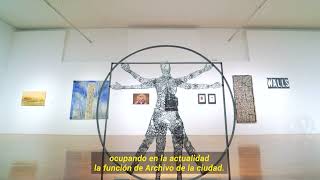
Inside, the building stands out for an impressive room made of Tuscan columns. Here, artistic exhibitions are held.
Inside, the building stands out for an impressive room made of Tuscan columns. Here, artistic exhibitions are held.
It should be noted that this important infrastructure, before being known as the Almudi Palace, also went by the names "Alhóndiga", "alfóndega" and "pósito", or house of bread. Its current name derives from Arabic, and its meaning is related to the measurements of aggregate capacity.
In addition, it has an archive service that is available to researchers, who can read royal documentation and scrolls. Also available is municipal documentation, composed of chapter books and a newspaper library with publications from the 18th to 20th centuries.
The Almudi Palace can be visited from Monday to Saturday from 11 a.m. until 9 p.m. Admission is free when there is an artistic exhibition, and it offers easy access for people with disabilities.
Activities in the region of Murcia


Share Article
More Articles


