Blog
»
{{catList[367].label}}
» Diego de Saavedra y Fajardo
Diego de Saavedra y Fajardo

Diego de Saavedra y Fajardo was a writer, diplomat and knight of the Santiago order as well as one of the highest representatives of the second phase of the Counter-Reformation. He participated in important international conversations and decisions to guarantee peace in Spanish territory during long periods of armed conflict.
He was born on May 6, 1584 in Murcia and was the youngest of four brothers. His father was Don Pedro de Saavedra and his mother was Doña Fabiana Fajardo. He grew up in a small town 5 kilometres south of the Murcian capital, where his family owned property.
Two years later, he went to Rome to start his diplomatic career. In 1612, he was appointed cipher secretary to Cardinal Gaspar de Borja, who was the Spanish ambassador in the Italian capital.
As business manager, he had the opportunity to travel to Naples and Sicily; in a short period, he was Secretary of State and War of Naples. In 1617, he was named canon of Santiago.
In this way, it can be said that his life is divided into two: a Roman stage dedicated to ecclesiastical politics and a Central European stage focused on international politics.
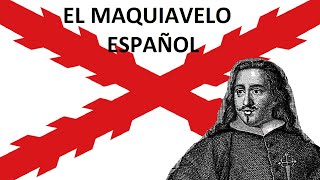

 In 1636, Emperor Ferdinand II died and the Diet of Regensburg took place to elect his successor. Saavedra acted as representative of Spain.
Between 1635 and 1648, during the declaration of war against France, governed by Richelieu, due to the constant defeats of the Spanish troops, Saavedra made different attempts at treaties to end the confrontations. However, he left the congress before the conclusion for peace.
Saavedra returned to Madrid sick after the signing of the Treaty of Munster. He retired to the Convent of Augustinian Recollects, where, shortly after his arrival, he died on August 24, 1648. His remains were buried in the chapel of Blessed Andres Hibernon of the Murcia Cathedral.
He went so far as to propose that the number of ecclesiastics and convents be limited in order to encourage agriculture and production.
He created many works among which stand out: Idea of a Christian political prince, represented in one hundred companies (1640) and Politics and reason of state of the Catholic King Don Ferdinand and Gothic, Castilian and Austrian Crown (1648). His last work was a satire entitled Literary Republic, published after his death in 1655.
He was born on May 6, 1584 in Murcia and was the youngest of four brothers. His father was Don Pedro de Saavedra and his mother was Doña Fabiana Fajardo. He grew up in a small town 5 kilometres south of the Murcian capital, where his family owned property.
Vocational training
In 1600, he began his studies of law and canons at the University of Salamanca. For one year, he was granted a habit of the Order of Santiago, and finished his degree in 1608.Two years later, he went to Rome to start his diplomatic career. In 1612, he was appointed cipher secretary to Cardinal Gaspar de Borja, who was the Spanish ambassador in the Italian capital.
As business manager, he had the opportunity to travel to Naples and Sicily; in a short period, he was Secretary of State and War of Naples. In 1617, he was named canon of Santiago.
In this way, it can be said that his life is divided into two: a Roman stage dedicated to ecclesiastical politics and a Central European stage focused on international politics.
International diplomat
From 1623, his diplomatic activities increased, as he had gained the trust of King Philip IV, who commissioned him to manage important political relations over 35 years in Italy, Germany and Switzerland.
Already by 1631, he was ambassador to Rome. Two years later, he moved to Bavaria, a territory where many clashes took place during the period of the Thirty Years' War.
Already by 1631, he was ambassador to Rome. Two years later, he moved to Bavaria, a territory where many clashes took place during the period of the Thirty Years' War.
Between 1635 and 1648, during the declaration of war against France, governed by Richelieu, due to the constant defeats of the Spanish troops, Saavedra made different attempts at treaties to end the confrontations. However, he left the congress before the conclusion for peace.
Saavedra returned to Madrid sick after the signing of the Treaty of Munster. He retired to the Convent of Augustinian Recollects, where, shortly after his arrival, he died on August 24, 1648. His remains were buried in the chapel of Blessed Andres Hibernon of the Murcia Cathedral.
Saavedra's vision
He was always a realist, which was why he proposed an economic reorganization and that the imperialist ideas that Spain wanted to impose in Europe be set aside. He exposed the unfavourable situation of the agricultural and commercial sector and proposed new alternatives for artisans and farmers who were abandoned, just like the financial inequality between ecclesiastics and lawyers.He went so far as to propose that the number of ecclesiastics and convents be limited in order to encourage agriculture and production.
Emblematic works
Diego de Saavedra y Fajardo stood out almost more for his thinking as a writer than as a diplomat. However, he had to work during hard periods of the history of Spain, with territorial losses, the hegemony of the Spanish Empire in Europe and other conflicts.He created many works among which stand out: Idea of a Christian political prince, represented in one hundred companies (1640) and Politics and reason of state of the Catholic King Don Ferdinand and Gothic, Castilian and Austrian Crown (1648). His last work was a satire entitled Literary Republic, published after his death in 1655.
Activities in the region of Murcia


Share Article
More Articles


