Blog
»
{{catList[367].label}}
» Count of Floridablanca
Count of Floridablanca

Jose Moñino y Redondo was Count of Floridablanca and a renowned Spanish politician who served as Secretary of State from 1777 to 1732. He also chaired the Central Supreme Board.
He was born on October 21, 1728 in Murcia. His father was an official of the ecclesiastical curia and in 1735 was appointed Senior Notary and Archivist of the Court, which is why his childhood was so close to the ecclesiastical world.
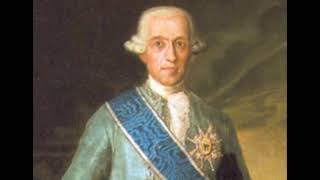

 It should be noted that in 1767 he acted against the instigators of the Esquilache revolt, which occurred in Cuenca. In addition, together with Campomanes and Aranda, he collaborated in the expulsion of the Jesuits from the territories of the Spanish crown.
He became secretary of the Office of State on February 19, 1777 until 1792. At the same time, he held the position of Secretary of Grace and Justice. During his work, he created the General Directorate of Roads in 1785. Later, in 1799, the General Inspection of Roads and Canals was created.
In 1792, his opponents accused him of corruption and abuse of authority. They managed to dismiss him and imprison him in the citadel of Pamplona, where he was tried and acquitted shortly after.
He decided to retire from public life, but due to the French invasion of the Peninsula in 1808, he was called to preside over the Central Supreme Board, which was to organize the resistance.
 Said will was not fulfilled until more than 100 years after his death, when Mayor Lopez Ambit asked, in the 1930s, for him to be transferred to Murcia. The remains were received by the authorities and citizens at the Carmen station, from where they were finally transferred in a funeral carriage to the Church of Saint John Baptist.
Among the contributions that the Count of Floridablanca offered to Spain at the end of the 18th century was the improvement of the mail service and education, managing to recover the island of Menorca, which had been captured by the British in the Spanish Succession War. He also proposed the first Spanish census, through which data on the population was collected to determine sex, age and marital status.
In Murcia, the Count of Floridablanca ordered the construction of the Palmar highway, which connects the El Carmen neighbourhood with Cartagena, to avoid the need to pass through conflict zones or those invaded by bandits.
He was born on October 21, 1728 in Murcia. His father was an official of the ecclesiastical curia and in 1735 was appointed Senior Notary and Archivist of the Court, which is why his childhood was so close to the ecclesiastical world.
Academic training
He studied at the Saint Fulgentius Major Seminary in his hometown. He later studied law at the University of Orihuela, then obtained a doctorate at the University of Salamanca, a profession he practiced with his father for a while.In his professional beginnings, he had important contacts, such as the Duke of Alba or Diego Rojas (president of the Council of Castile and Bishop of Cartagena), who facilitated his entry to the Council of Castile as a criminal prosecutor in 1766.
Later, he met Campomanes, with whom he would maintain a strong professional relationship, jointly taking charge of defending the prerogatives of the Crown against other powers, especially against the Church.
Later, he met Campomanes, with whom he would maintain a strong professional relationship, jointly taking charge of defending the prerogatives of the Crown against other powers, especially against the Church.
Professional achievements
In 1772, he was plenipotentiary ambassador to the Holy See, managing to influence Pope Clement XIV to dissolve the Society of Jesus. As a reward for those services, Charles III named him Count of Floridablanca in 1773.He became secretary of the Office of State on February 19, 1777 until 1792. At the same time, he held the position of Secretary of Grace and Justice. During his work, he created the General Directorate of Roads in 1785. Later, in 1799, the General Inspection of Roads and Canals was created.
In 1792, his opponents accused him of corruption and abuse of authority. They managed to dismiss him and imprison him in the citadel of Pamplona, where he was tried and acquitted shortly after.
He decided to retire from public life, but due to the French invasion of the Peninsula in 1808, he was called to preside over the Central Supreme Board, which was to organize the resistance.
Latest requests
While holding this important position, the Count of Floridablanca died on December 30, 1808 in Seville.
In his will, he requested the following: “if I should die in Murcia, that I be buried in my chapel in the Parish Church of Saint John Baptist and in his pantheon. And if I die elsewhere, that I be deposited in the Parish Church where I died and after a year of my death my bones are transferred to the Pantheon”.
In his will, he requested the following: “if I should die in Murcia, that I be buried in my chapel in the Parish Church of Saint John Baptist and in his pantheon. And if I die elsewhere, that I be deposited in the Parish Church where I died and after a year of my death my bones are transferred to the Pantheon”.
His work
Throughout his professional career, he wrote several works based on political and legal issues, the most outstanding being the Instruction reserved for the State Board, which compiles his political thought. It is a valuable document regarding the meaning of the enlightened political movement in Spain. In addition, it focuses on the defence of royalties and amortization.Among the contributions that the Count of Floridablanca offered to Spain at the end of the 18th century was the improvement of the mail service and education, managing to recover the island of Menorca, which had been captured by the British in the Spanish Succession War. He also proposed the first Spanish census, through which data on the population was collected to determine sex, age and marital status.
In Murcia, the Count of Floridablanca ordered the construction of the Palmar highway, which connects the El Carmen neighbourhood with Cartagena, to avoid the need to pass through conflict zones or those invaded by bandits.
Activities in the region of Murcia


Share Article
More Articles


